
Hot
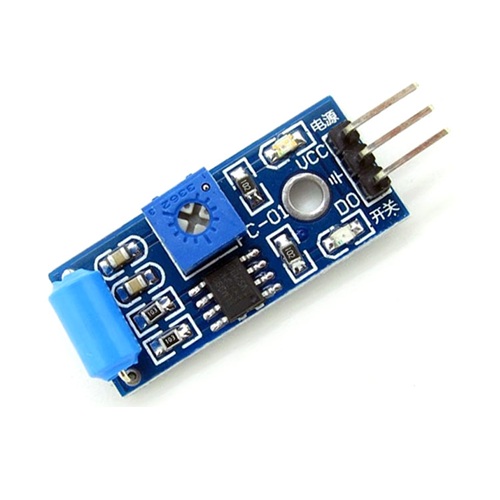
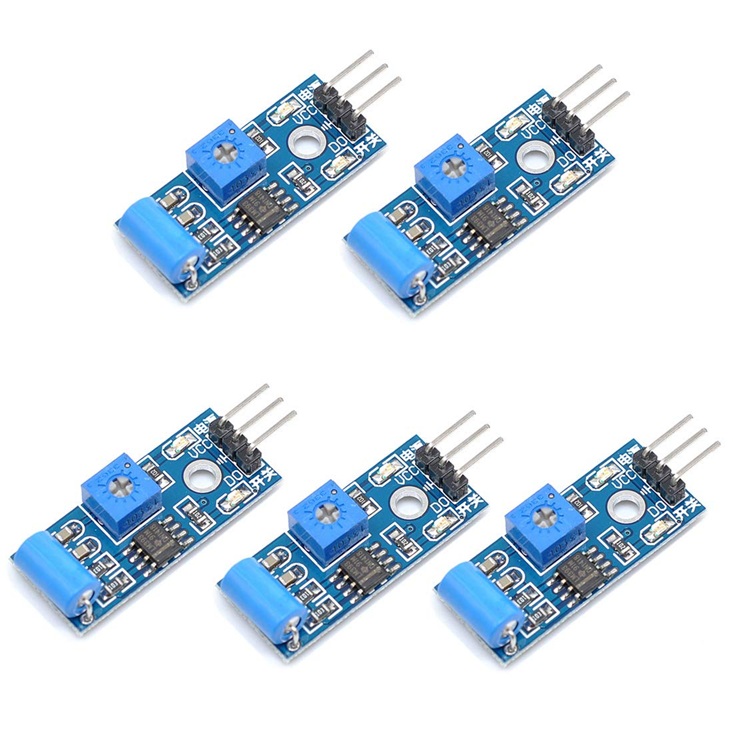
Vibration Sensor Module for Arduino
Key Specifications
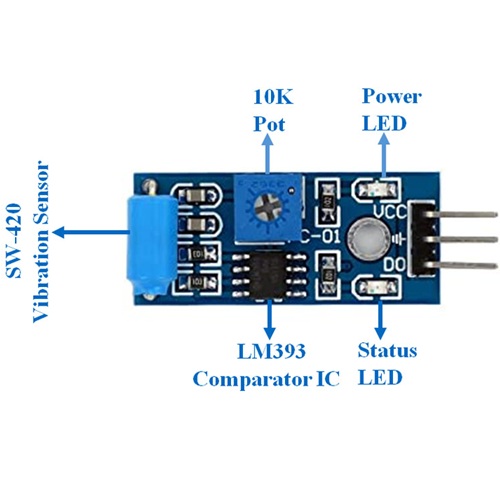
- Sensor Type: Often uses ball-type (SW-18010P, SW-420) or reed-type (801S) vibration sensors.
- Operating Voltage: 3.3V to 5V DC.
- Output:
- Digital Output (D0/DO): Provides a clean high/low (0 or 1) signal when vibration exceeds a set threshold, suitable for microcontrollers.
- Analog Output (A0/AO): Some modules offer this for real-time vibration intensity measurement (e.g., 801S modules).
- Sensitivity: Adjustable using an onboard potentiometer (trimmer) to set the detection threshold.
- Comparator: Commonly uses the LM393 comparator chip.
- Indicator: Onboard LED to show when vibration is detected (output goes high/low depending on module).
- Mounting: Typically includes screw holes for flexible installation.
- Applications: Burglar alarms, tilt detection, game controllers, mechanical equipment monitoring, anti-theft systems.
How It Works (Digital)
- No Vibration: Output is at a set level (e.g., high or low depending on the sensor type).
- Vibration Detected: If the vibration exceeds the sensitivity set by the potentiometer, the output signal changes (e.g., goes low or high), triggering the indicator LED.