Hot
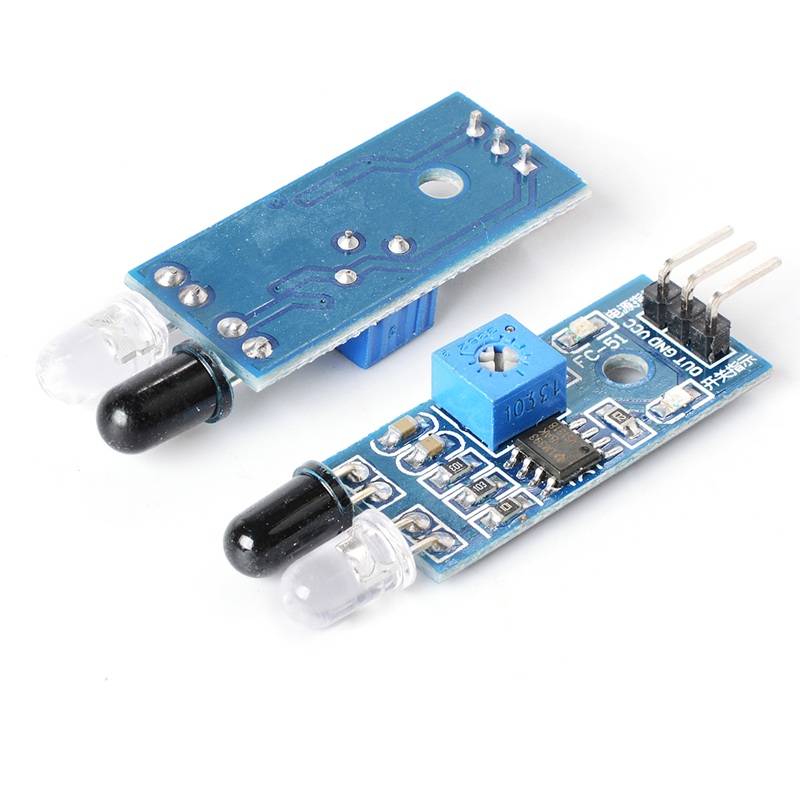
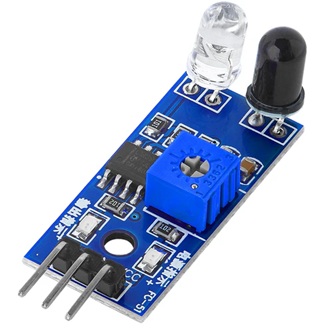
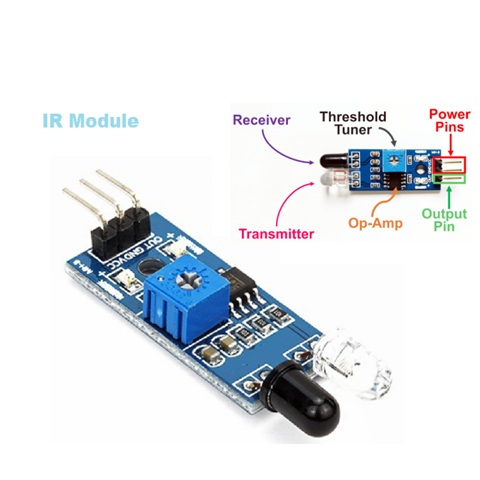
IR Obstacle Avoidance Sensor Module
How it Works
- Emission: An IR LED sends out invisible infrared light beams.
- Reflection: If an object is in the path, the IR light bounces off it.
- Detection: An IR receiver detects the reflected light.
- Processing: An onboard comparator (like LM393) processes the signal.
- Output: A digital signal is sent; often LOW (0V) for an obstacle and HIGH (5V) for clear, triggering an indicator LED.
Key Features & Specs
- Components: IR Emitter, IR Receiver, Comparator, Potentiometer, Indicator LED.
- Voltage: Typically 3.3V – 5V DC.
- Detection Range: Adjustable, often 2cm to 30cm or more (e.g., 2-80cm).
- Angle: Around 35 degrees.
- Output: Digital (TTL level), sometimes Active LOW.
- Adjustment: Potentiometer knob to fine-tune sensitivity/distance (clockwise increases, counter-clockwise decreases).
Common Uses
- Robotics (obstacle avoidance, line following).
- DIY Smart Cars.
- Assembly Line Counting.
- Automation Projects.